
LSBU and UBT have published a new paper entitled “3D CNN for breast density classification in microwave imaging”.

The study looks at how microwave imaging could help classify breast density in a safer and more comfortable way, especially for younger women with dense breast tissue, where traditional mammography is often less effective. Using artificial intelligence and more than 6,700 breast scans collected with the MammoWave® device across several European hospitals, the team achieved an overall accuracy of 80%. These encouraging results show the potential of microwave imaging to support more personalized and accessible breast cancer screening in the future.
“Clinical readiness of microwave imaging for breast cancer: a state-of-the-art review of current evidence and challenges”, new review paper led by our clinical partner SESCAM

A new review paper led by SESCAM, entitled “Clinical readiness of microwave imaging for breast cancer: a state-of-the-art review of current evidence and challenges” explores the latest progress in microwave breast imaging (MBI), a technology that uses safe, low-power radio waves to image the breast without radiation or uncomfortable compression. The review highlights the promising results already achieved by MBI systems, while also discussing the challenges that still need to be addressed before the technology can become part of routine clinical practice. The authors hope this work will help guide future research and support the wider adoption of microwave imaging in breast cancer care.
Helping women feel informed and supported with the MammoScreen Project Lite App.

We spoke with Prof. Paul O´Brien, CEO of ELAROS 24/7 Limited, the company behind the MammoScreen Project Lite App, asking questions from the perspective of a women worried about her breast cancer risk, trying to better understand how digital innovation can support them.In this interview, Prof. O´Brien explores how the app helps users understand breast cancer risk, the role of hereditary factors and the importance of screening, while also introducing emerging technologies such as MammoWave®.We hope that this interview highlights how digital tools can empower women with trustworthy information and support more informed conversations with their healthcare professionals. Question (Q) 1: I’m worried about my risk of breast cancer… how can this app help me understand it better? ELAROS CEO´s Answer (ELAROS): The app explains risk factors in simple terms, including family history and lifestyle. It doesn’t diagnose anything, but it helps you understand what might increase your risk and when it might be useful to speak to a doctor. Q2. Can I rely on information from an app like this? ELAROS: Yes. The app is developed with clinicians and researchers and all information is based on scientific evidence. It’s designed to support, not replace, medical advice. Q3. I don’t have a medical background; Will I understand it? ELAROS: Absolutely. The app is designed for everyday users, using clear language and simple explanations. Q4. What should I do if I think I’m at high risk of breast cancer? ELAROS: The app encourages you to speak with a healthcare professional, who can guide you on appropriate screening or genetic counselling, if needed. Q5. How does this app help women concerned with their risk for breast cancer? ELAROS: By raising awareness, the app helps more women understand their health, encouraging earlier screening and potentially saving lives. Q6. What is your vision for the future of breast cancer screening in an increasingly digital world? ELAROS: Our goal is more personalised, accessible and comfortable screening, where every woman has the knowledge and tools to take control of her health. Q7: How can the app help me notice changes in my breasts that I should not ignore? ELAROS: The app provides clear, educational guidance on what types of changes in the breast should be checked by a healthcare professional. The aim is not to cause worry, but to help women become more familiar with their bodies so they can seek advice early if something unusual appears. Q8: Does the app teach me how to self-check my breasts? ELAROS: Yes. The app includes easy-to-follow educational content on breast awareness, explaining how to become familiar with what is normal for you. Q9: What does the app explain about the different types of breast cancer? ELAROS: The app introduces the main types of breast cancer in simple language, explaining that not all breast cancers are the same. The goal is to help users understand that breast cancer is a complex condition, but one that is increasingly treatable, especially when detected early. Q10: What causes breast cancer, and can I reduce my risk? ELAROS: The app explains that breast cancer does not usually have a single cause. It is often linked to a combination of factors, including age, genetics, hormonal influences and lifestyle. While not all risk factors can be changed, the app highlights that awareness, regular screening and healthy lifestyle choices can all contribute to reducing risk or supporting early detection. The focus is on empowering women with knowledge, not on blame or fear.
Young and worried about breast cancer risk? This is for you.

If you are concerned about your breast cancer risk, especially because of a family history, that concern is understandable and it can be a helpful first step towards taking care of your health.Breast cancer is most commonly diagnosed in women who are within the age range of routine screening programmes. However, it can also occur earlier in life. In Europe, around one in four cases are diagnosed in women under 50 , meaning that some women are affected before they are ever invited to screening programmes. Breast cancer in men is rare, representing about 1% of all cases.These figures do not mean that risk is high for most people. The important message is that most people will never develop breast cancer, and when it is detected early, treatment outcomes are often very positive. Awareness is therefore not about worry, but about being informed and knowing when to seek advice.If you are concerned about your risk, particularly if breast cancer runs in your family, there are simple and supportive steps you can take:
The MammoScreen Project Lite App was launched!
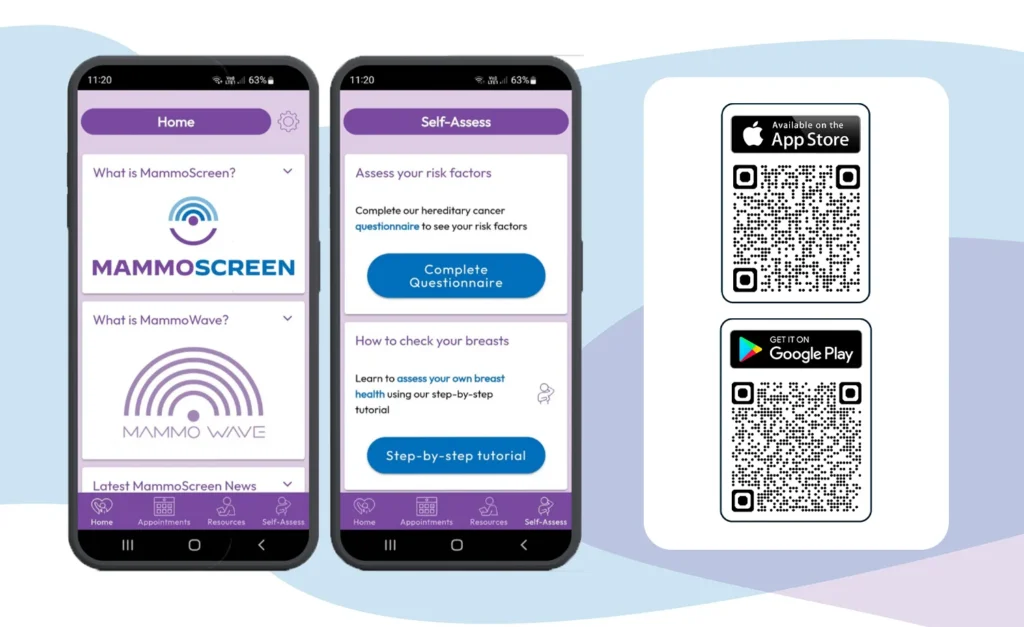
Whether you’ve been personally affected by breast cancer or simply want to learn more about prevention and early detection, having access to trustworthy information can make all the difference. That’s why the MammoScreen Project developed the Lite App, a free resource designed to inform, support and empower users. Alongside updates about the project and the MammoWave® device, the app offers professionally reviewed educational content about breast cancer, screening pathways, risk factors and what to expect during an appointment. Available in English, Italian, Spanish and Portuguese, the app helps users stay connected to the latest scientific progress in breast cancer screening and early detection. Download the app and explore the resources today. Scan the QR code and download the MammoScreen Project Lite App on your Apple or Android phone!
The MammoScreen Project Lite App: Empowering women through knowledge.
The Lite App was developed as part of the MammoScreen Project´s mission to make breast cancer screening more inclusive and accessible. This user-friendly mobile application aims to provide clear, reliable and easy-to-understand information about breast cancer, helping women to make informed decisions about their breast health.One of the key strengths of the app is its focus on awareness. Breast cancer remains the most common cancer among women in Europe, yet many are still unaware of their personal risk factors or the importance of regular screening. The app addresses this gap by offering accessible information about what breast cancer is, how it develops and why early detection is so important.A particularly valuable feature is its focus on risk awareness, including hereditary breast cancer. The app helps users understand how factors such as family history may influence their risk, encouraging them to reflect on their personal situation and, when appropriate, seek medical advice. By translating complex medical information into simple language, the app empowers women to take a more active role in their health.The app also introduces users to MammoWave®, the innovative microwave-based imaging technology being studied in the project. It explains how this approach differs from traditional mammography, highlighting potential advantages such as the absence of radiation and improved comfort during the examination. This can help reduce anxiety and build trust in new screening methods, especially for women who may feel hesitant about existing techniques.Beyond information, the app serves as a gateway to the wider MammoScreen Project. Users can explore additional resources, stay updated on project developments, and access trusted sources of information. In doing so, the app strengthens the connection between research and the public, making scientific innovation more transparent and accessible.Importantly, the app supports one of the core goals of the project, which is to promote a more patient-centred approach to breast cancer screening. By raising awareness, improving health literacy and encouraging early detection, it contributes to better outcomes and helps reduce inequalities in access to care.In a landscape where misinformation can easily spread, tools like the MammoScreen Project Lite App play a crucial role in providing accurate, evidence-based information in a simple and engaging format. Our aim is to empower women with knowledge, one of the most powerful tools in the fight against breast cancer. Download the app and explore the resources today. Scan the QR code and download the MammoScreen Project Lite App on your Apple or Android phone!
Spotlight on Innovation: ELAROS 24/7 Limited and its role in the MammoScreen Project
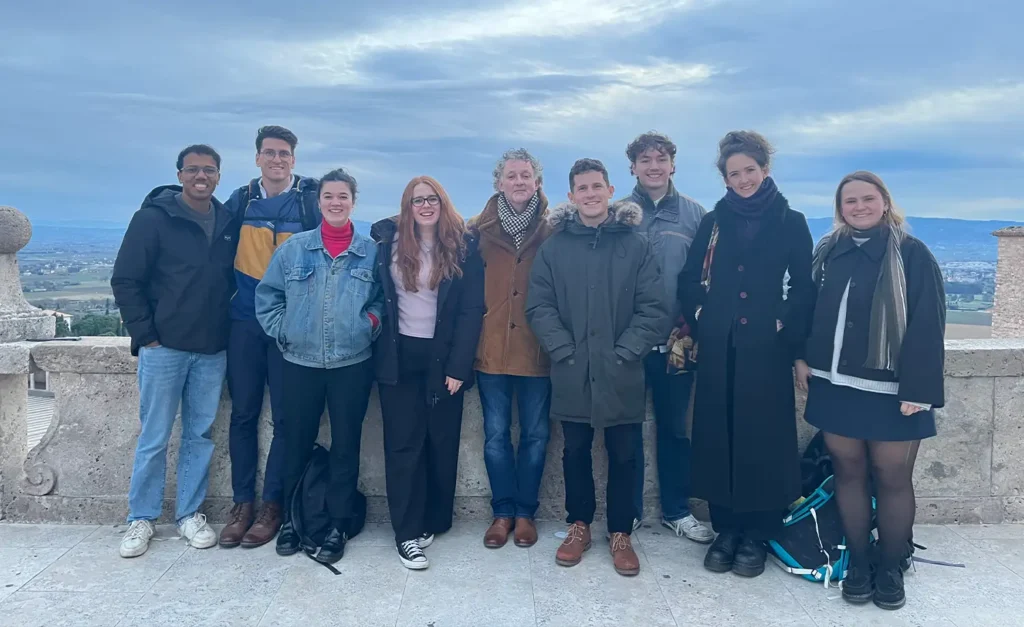
Based in Sheffield, UK, ELAROS 24/7 Limited is a digital health company specialising in the development of software solutions that support patients, clinicians and researchers. Founded in 2010, the company operates at the intersection of healthcare, technology and research, with a strong focus on improving patient outcomes through user-centred design and collaboration with healthcare systems such as the NHS in the UK, but also in Australia and Ireland.The company specialises in the development of digital health tools aimed at improving patient care, clinical research and healthcare system efficiency. Their solutions typically include mobile apps and web-based clinical/research platforms that support patient engagement, remote monitoring and data collection in clinical studies. These tools are co-designed with patients and healthcare professionals to ensure usability and relevance. They are used across different therapeutic areas to capture patient-reported outcomes, facilitate communication between patients and clinicians and streamline clinical workflows.As a MammoScreen Project partner, ELAROS plays a key role in ensuring that technical innovation is not only scientifically robust but also meaningful and accessible to patients. Their main contributions to the project are the Lite App, a digital tool designed to inform, engage and empower women in understanding breast cancer and screening options, and the Clinical Portal, a web-based platform designed to support healthcare professionals reviewing, organising and contextualising the results obtained within the project´s clinical study.A distinctive strength of ELAROS is its commitment to co-creation. The company works closely with patients, clinicians and researchers to design solutions that reflect real needs. In the MammoScreen Project, this approach has been central to shaping the app and related tools that gather insights into women’s experiences, needs and concerns – such as the hereditary breast cancer questionnaire developed by the patient Association EVITA.ELAROS has also led Patient and Public Involvement and Engagement (PPIE) activities within the MammoScreen Project. Through workshops and collaborative sessions, they have actively involved women and patient advocates in the design and refinement of the app, ensuring it is intuitive, relevant and trustworthy.Beyond the technical aspects, ELAROS helps to bridge the gap between research and real-world use, one of the core aims of the MammoScreen Project. By translating complex scientific concepts into accessible information, they help build understanding and trust among future users of the MammoWave® technology.As MammoScreen approaches its final phase, ELAROS’ work is especially valuable. Their digital solutions help ensure that the project’s outcomes are not only clinically effective, but also visible, understandable and usable by the people who most benefit from them: women.
Upcoming events – June 2026

Our partners from UBT were invited to participate in the 2nd International Conference on Young Women’s Breast Cancer and Health , held on 15-16 November 2025 in New Delhi, India. The event brought together healthcare professionals, researchers, and advocates from around the world to discuss the latest developments in breast cancer care and women’s health, with a special focus on younger women. During the conference, UBT Co-Founder Gianluigi Tiberi presented the talk “Lessons from Global Models: Breast Test Using Radiofrequency Signals” , highlighting the potential of MammoWave® as a safe and accessible breast test that could support prevention and expand screening opportunities. The conference focused on encouraging research that can make a real difference in clinical practice and help address the specific challenges faced by younger women affected by breast cancer. LSBU and UBT participated in the 1st edition of the International Conference on Medical Microwave Imaging Applications (ICMWIA), held on 3-5 February 2026, in Lisbon, Portugal, and organised within the European 3BAtwin initiative. During the conference, the teams presented their work on “Exploiting Phase Information from Microwave Imaging for Breast Density Classification: A Deep Learning Approach” which explored how information from microwave imaging can help classify breast density using artificial intelligence. They presented results obtained with a deep learning model that can be used to distinguishing between high- and low-density breast tissue, highlighting the potential of microwave imaging to support breast cancer risk assessment and improve AI-based screening approaches. Also, in ICMWIA, SESCAM joined LSBU and UBT presenting the study “Microwave Imaging for Breast Cancer Screening: Interim Analysis Results from MammoScreen Clinical Trials”. In this work, they shared interim results from the MammoScreen Project clinical trial, obtained from the analysis of data gathered from 3,000 volunteers across nine hospitals in five European countries. The presentation highlighted the progress of the MammoWave® AI model in detecting suspicious breast findings, showing significant improvements after combining machine learning and statistical approaches. The promising results obtained with the updated model demonstrate the potential of microwave imaging for future breast cancer screening programmes. UBT attended the European Congress of Radiology 2026 (ECR 2026), held from 4-8 March in Vienna, Austria. Organised by the European Society of Radiology, ECR is one of the world’s leading radiology conferences, bringing together experts and researchers from across the medical imaging field. UBT´s Gianluigi Tiberi contributed to the session “RPS 1002 – Breast Cancer Screening: Technology, Tools, and Trends”, sharing the project´s latest scientific progress with the oral presentation “Radiofrequency-Based Imaging for Breast Screening: Interim Analysis Results from MammoScreen Clinical Trial”. SESCAM participated in the XIV Jornadas Nacionales SEDISA (embed link: ), held on 15-17 April 2026 in Toledo, Spain, which were organised by the Sociedad Española de Directivos de la Salud (SEDISA), one of Spain’s leading healthcare management organisations. The conference brought together hospital managers, healthcare leaders, and experts to discuss innovation, technology and the future of healthcare management under the theme “Healthcare Management in the New Era: Strategy, Innovation and Technology.” During the event, the SESCAM team presented the talk “Microwave Imaging for Breast Cancer Detection: Technological Advances, Clinical Results and Future Challenges”, where they shared the latest developments from the MammoScreen Project and discussed the potential of microwave imaging in the future of breast cancer screening. The Institute for Research and Innovation in Health (i3S) hosted the Porto Cancer Meeting, from 22-24 April 2026 in Porto, Portugal, as a joint event with the PREVENTABLE project. The meeting gathered leading experts in cancer research, clinical practice and patient advocacy to discuss recent advances and ongoing challenges in the field. A Speaker Spotlight featured Tamara Milagre, founder and president of the patient association EVITA, one of the MammoScreen Project´s partners. Her work spans initiatives within ERN GENTURIS, patient education, cancer registries, and international efforts in genomic medicine. A prominent advocate for hereditary cancer awareness and patient empowerment, she emphasized the importance of collaboration between patients, clinicians and researchers within EU funded projects. SESCAM participated in the 38 Congreso Nacional de la SERAM, organized by the Sociedad Española de Radiología Médica (SERAM), held from 20-23 May 2026 in Valencia, Spain. The congress brought together radiology professionals and experts to discuss the latest developments in medical imaging, healthcare management and innovation in Spain. Contributing to the session “Process Engineering, Engineers in Radiology” within the area of “Safety, Management and Quality”, Dr. Daniel Sanchez-Bayuela presented the talk “From Clinical Research to Healthcare Innovation: The Role of the Biomedical Engineer in Radiology”, highlighting how biomedical engineering can help transform radiology processes by connecting clinical research, technological innovation, and everyday healthcare practice. The magazine La Vida en Rosa featured an interview with our SESCAM partners about the MammoScreen Project and its research into the use of low-power radiofrequency signals and artificial intelligence for breast cancer screening. The interview highlighted the progress made with MammoWave®, including two completed clinical studies and the ongoing large-scale European clinical trial funded by the EU’s Horizon Europe Cancer Mission. The article also emphasized the importance of multidisciplinary collaboration to ensure that innovation responds to real clinical needs while keeping patients at the center of care. The interview highlighted the growing role of biomedical engineers in helping integrate AI into healthcare and shaping the future of multidisciplinary hospital teams. The MammoScreen Project thanks La Vida en Rosa for helping raise awareness of breast cancer research and innovation. EVITA continues to raise awareness about breast cancer in young women, joining the voice of the Breast Cancer in Young Women Foundation (BCYWF) as an ambassador for hereditary breast cancer awareness. This collaboration highlights the specific challenges faced by young women carrying hereditary breast and ovarian cancer (HBOC) genetic variants, many of whom are diagnosed at an early age. At the same time, the initiative also draws attention to the growing number of sporadic breast cancer cases in younger women, many of whom fall outside current screening programmes and are often diagnosed at later stages due to low awareness and limited early detection opportunities. By supporting the “2040 Initiative – First
Upcoming events

JulyMedica AI – The Conference 2026 will take place on 16 July at the Champalimaud Foundation in Lisbon, Portugal. Bringing together clinicians, researchers, healthcare innovators, data scientists and industry leaders, the conference focuses on the growing role of AI in transforming healthcare and medical research. The programme will include expert talks, panel discussions and presentations exploring AI-driven approaches in diagnostics, imaging, clinical decision support and personalised medicine. The event provides an important opportunity to discuss how AI can enhance breast cancer screening workflows, improve diagnostic accuracy and support more patient-centred healthcare solutions. The International Conference on Precision Medicine and AI Healthcare (HealthAI2026) will take place from 27 to 28 July in Prague, Czech Republic. This technology- and methodology-focused conference brings together healthcare professionals, researchers, engineers and digital health experts to explore the latest advances in AI and data-driven healthcare innovation across a wide range of medical fields. HealthAI 2026 will address topics such as AI-assisted diagnostics, medical imaging algorithms, predictive analytics, personalised treatment strategies, decision-support systems, and the future integration of AI into clinical workflows. The 6th World Congress on Breast Cancer will take place in Rome, Italy, on July 27-28. With a strong focus on innovation and early detection strategies, the congress provides an important international forum for sharing developments in breast imaging technologies, patient-centred care, clinical validation and collaborative approaches to improving breast cancer outcomes. AugustOne of the editions of the International Conference on Breast Cancer (ICBC 2026) will take place in Istanbul, Türkiye, on 17-18 August. Focusing in clinical practice, innovations and interdisciplinary collaboration, this edition will cover prevention, diagnosis, treatment and emerging trends on breast cancer research through keynote sessions, oral presentations, e-posters and abstract contributions. SeptemberThe International Conference on Electromagnetics & Applications (ICEA 2026) will take place from 6 to 7 September in Málaga, Spain. The conference gathers researchers, engineers and industry experts working in electromagnetics, antennas, microwave systems, propagation, metamaterials and related technologies. ICEA 2026 will feature technical sessions, keynote talks and scientific presentations exploring both theoretical advances and real-world applications across several specialisms, including healthcare and biomedical engineering. The German National Centre for Tumour Diseases (NCT) organises their annual Patient Expert Conference from 18 to 20 September 2026 in Essen, Germany. Dedicated to the theme of “Patients as Partners in Cancer Research”, the conference brings together patient advocates, researchers and healthcare professionals to strengthen patient involvement in cancer research and innovation. The event highlights the importance of patient-centred approaches in clinical research, communication and healthcare decision-making. OctoberThe European Society of Breast Imaging Annual Scientific Meeting (EUSOBI 2026) will take place from 1 to 3 October in Maastricht, the Netherlands. One of Europe’s leading congresses dedicated to breast imaging and early detection, the event brings together radiologists, clinicians, researchers, medical physicists and industry experts from across the world to discuss the latest advances in breast cancer screening and diagnosis. EUSOBI 2026 places particular emphasis on innovations in mammography, breast MRI, ultrasound, AI and emerging imaging technologies, while also addressing key topics such as personalised screening strategies, dense breast imaging and improvements in early breast cancer detection. NovemberThe European Cancer Congress 2026 will take place in London, United Kingdom, from 23 to 24 November. The congress provides a multidisciplinary platform to discuss the latest developments in cancer prevention, diagnosis, treatment and patient care. The scientific programme will include keynote presentations, clinical and translational research sessions and networking opportunities covering a wide range of oncology topics, including breast cancer screening and early detection. DecemberThe San Antonio Breast Cancer Symposium (SABCS 2026) is recognised as one of the world’s leading scientific meetings dedicated to breast cancer research. Taking place in San Antonio, Texas, USA, this year´s edition will be held on 8-12 December. The symposium brings together thousands of clinicians, researchers, industry representatives and patient advocates from all over the world to share the latest advances in breast cancer prevention, screening, diagnosis, treatment and survivorship.
The MammoScreen Project prepares for the second Stakeholder Workshop

In May 2024, the MammoScreen project held its first stakeholder workshop in Lisbon, bringing together healthcare professionals, researchers, policymakers and patient representatives to discuss the future of breast cancer screening and the potential role of novel devices.As the project enters its final phase, a second stakeholder workshop will take place during the upcoming in person-event on 23-24 June 2026 in Brussels. This step marks an important milestone in the project’s journey, providing a timely opportunity to reflect on progress, share emerging results and discuss the next steps towards real-world implementation of technologies, such as MammoWave®. With the large-scale clinical study nearing completion and the ongoing health technology assessment, the project is probing the critical phase of translation – how to bring this innovation into healthcare systems.The upcoming workshop will gather expert stakeholders from across Europe to ensure that the project’s outcomes are not only scientifically sound, but also aligned with real-world needs, regulatory framework, and patient expectations. Building on the foundations laid during the first stakeholder meeting in 2024, where discussions focused on identifying challenges and shaping the project’s direction, this event will concentrate on validating results, refining implementation strategies and addressing remaining barriers to adoption.Key topics will include the clinical outcomes, MammoWave®’potential role alongside existing screening methods, cost-effectiveness and practical considerations for integration into national screening programmes. Stakeholders will also explore how to ensure equitable access, improve patient experience and maintain trust in new screening technologies.As the project approaches its conclusion, this dialogue becomes increasingly important. Successfully introducing a new medical technology requires more than evidence; It demands collaboration, transparency, and alignment between all actors involved in healthcare decision-making.The Brussels workshop will, therefore, play a crucial role in shaping the legacy of the MammoScreen Project, helping to ensure that its results can translate into meaningful impact, contributing to a more inclusive, patient-friendly and effective breast cancer screening across Europe.